
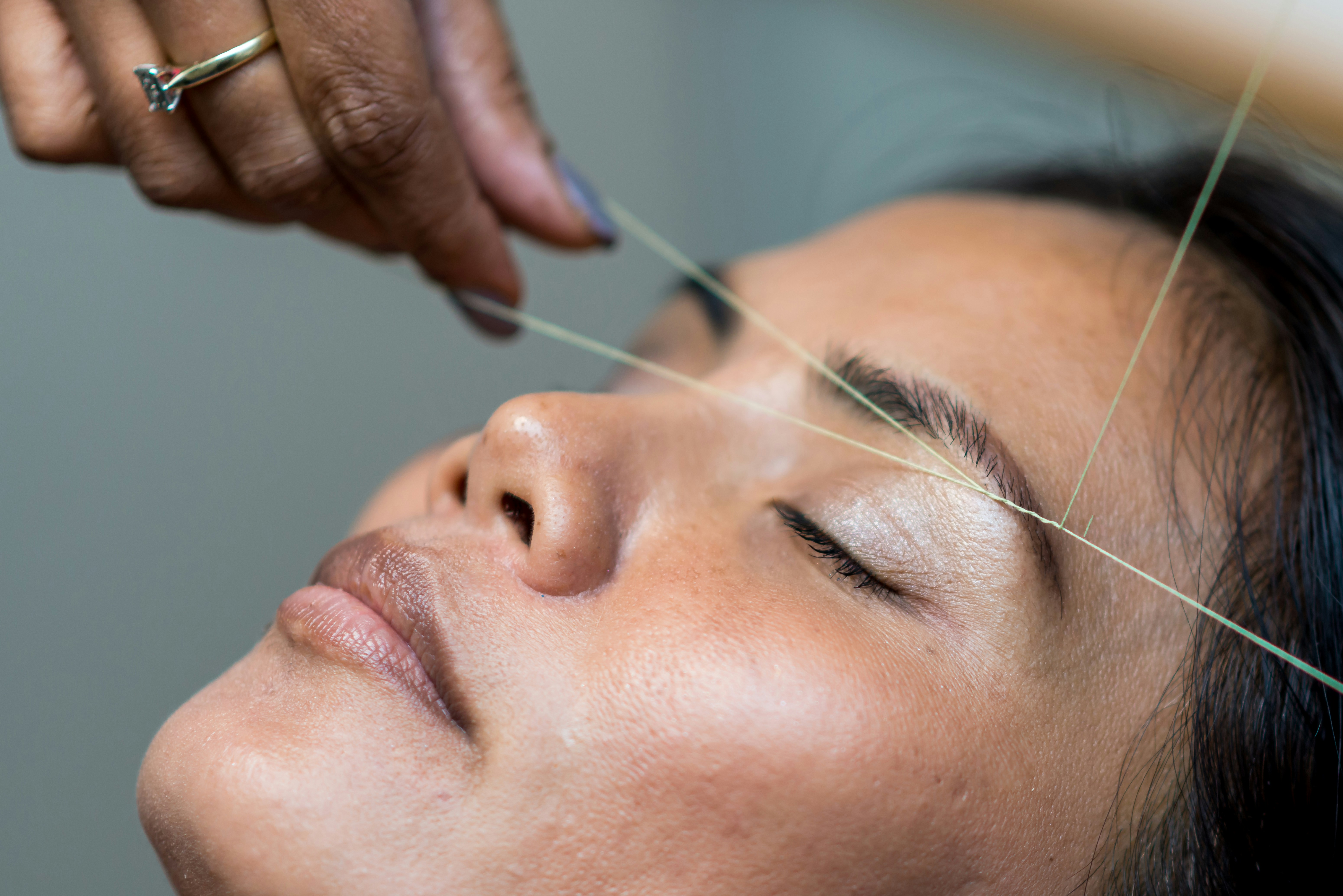
Reference photo: eyebrow threading, a short-term way of shaping brows.
CHAPTER 02 · BROWS & MICROBLADING
Semi-permanent brows are one of the most talked-about cosmetic treatments, and one of the easiest to misunderstand. This guide covers how microblading differs from other brow tattooing, why age and skin type change the picture, and why more men are looking into it. Read it before you book a consultation anywhere.
GLOSSARY · THREE TERMS
People often use these words as if they meant the same thing. They don’t, and the difference affects how the result looks and how it ages.
Microblading: a hand-held tool with a row of very fine needles is used to make small cuts in the skin and deposit pigment in strokes that look like individual hairs. It suits people who want fuller-looking brows with a natural texture, but crisp strokes can soften and blur as they heal and fade.
Brow tattooing: the wider family of techniques that use a powered device to place pigment, often as soft shading or a powdered effect rather than hair strokes. Many artists combine the two approaches, so it helps to ask exactly which technique is being proposed.
Touch-up: a follow-up session once the skin has healed, used to fill in patchy areas. Semi-permanent pigment fades over time, and how quickly it fades depends on skin type, sun exposure and skincare habits.
SUITABILITY
Skin changes with age. It usually gets thinner, less elastic and slower to heal. Fine hair strokes rely on the skin holding a precise line, so on mature skin they can spread or heal unevenly. Brows also tend to sit lower over time, which makes shape and placement harder to judge.
None of this rules anyone out automatically. It does mean the conversation before a brow treatment matters more, and that some people may be better served by a softer technique, or by waiting. If you take regular medication or have a skin condition, speak to your doctor first.
Read the full argument: Why Over 55s Should Think Twice About Eyebrow Tattooing →
Reference photo: a powered device used for brow tattooing.
A GROWING INTEREST
More men are now looking at brow treatments, usually to fill in sparse patches, balance uneven brows or cover a gap left by a scar. In most cases the goal is for nobody to notice. That means a flatter, fuller shape, less arch and strokes that follow the natural hair rather than a defined outline.
The same questions about healing, fading and skin type apply to everyone. The difference is mostly in how restrained the design should be.
BEFORE A CONSULTATION
i. Which technique are you proposing for my skin, hair strokes, shading or both, and why?
ii. Can I see healed results, not just fresh ones, on skin similar to mine?
iii. How is the shape mapped, and can I approve it before anything begins?
iv. What does aftercare involve, and what might change how my pigment fades?
SEE ALSO
For the wider picture, see Cosmetic Tattooing: a candid overview. For lips and eyes, see Lip Blush & Eyeliner. For every beauty guide, browse the Beauty archive.
Spotted something unclear or have a brow topic you’d like us to cover? Write to the editors.